
01
Heated tables with temperature control
The polymer material is heated to a precisely set temperature. Stable heating is the key to even forming of the part.
We produce polymer liners and parts on heated tables with full control of temperature, bonding and quality — in a cycle ready for serial automotive production.
Polymer thermoforming is a process in which a flat sheet or pre-cut polymer blank is heated on a dedicated table and then laid into a mold to take its target shape. Sounds simple — but quality lives in the details: heating time, temperature uniformity and placement precision.
At Art Mech Studio every cycle runs through heated tables with thermal-imaging control and poka-yoke stations equipped with industrial cameras. Operator and system together make sure every part leaves the line with the same quality as the first one.
A heated table brings the material up to the temperature at which the polymer becomes plastic and can be formed to shape. Control runs in a closed loop — the system keeps watch so it is neither too cold nor too hot.
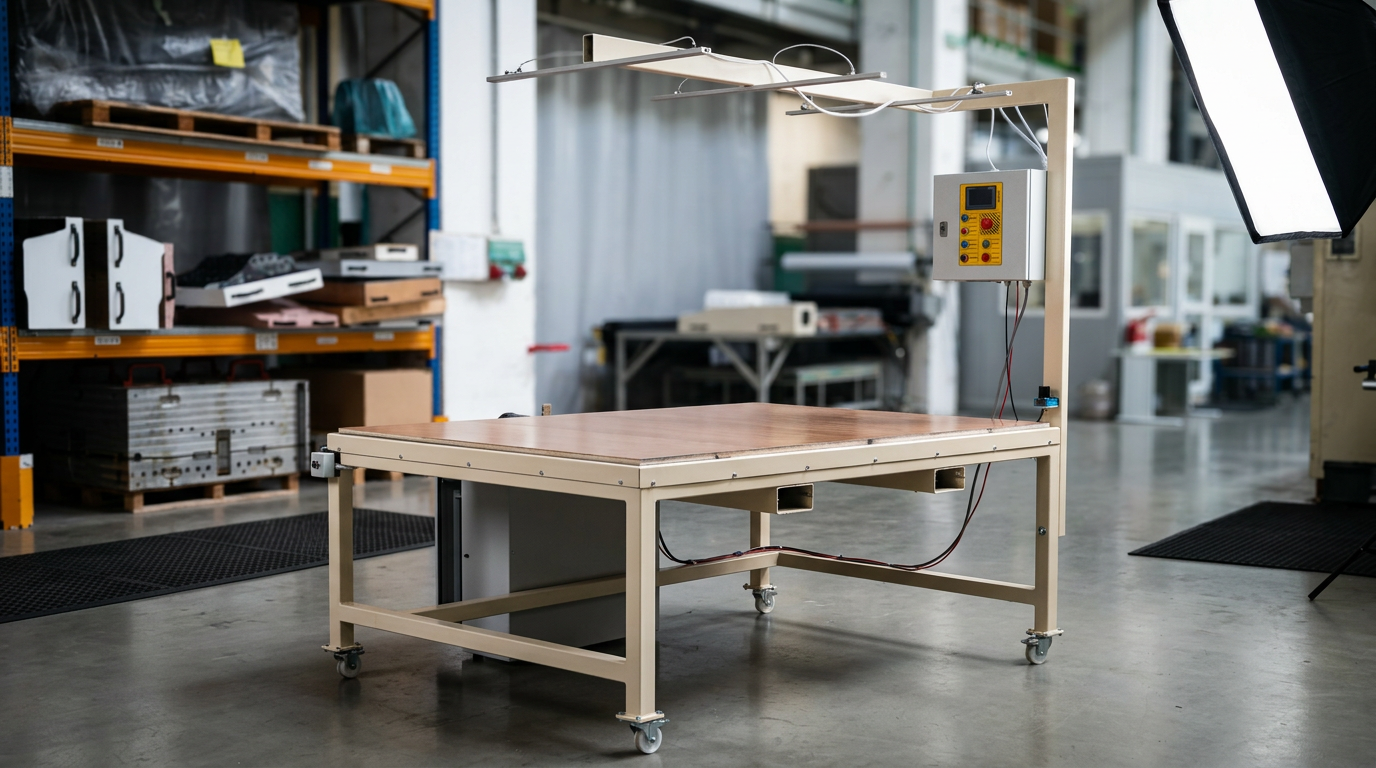
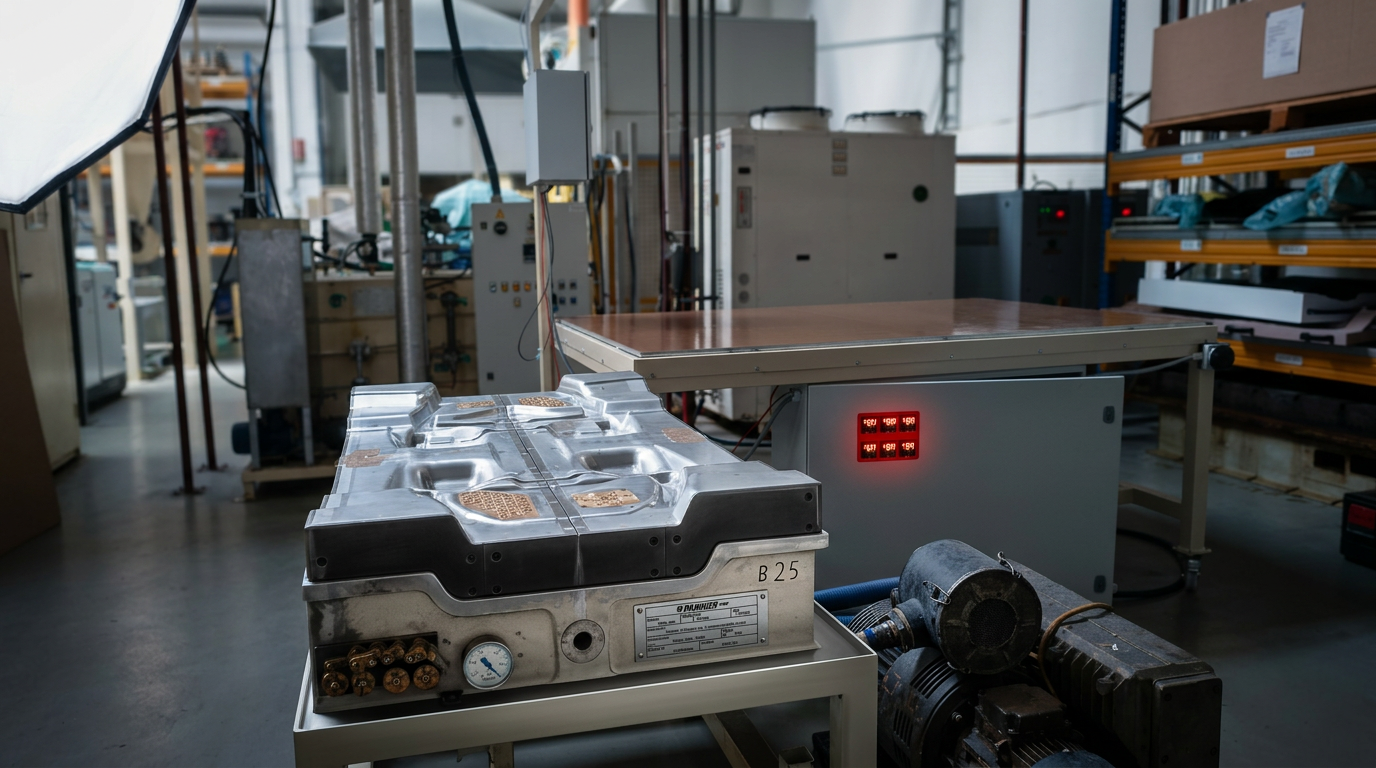
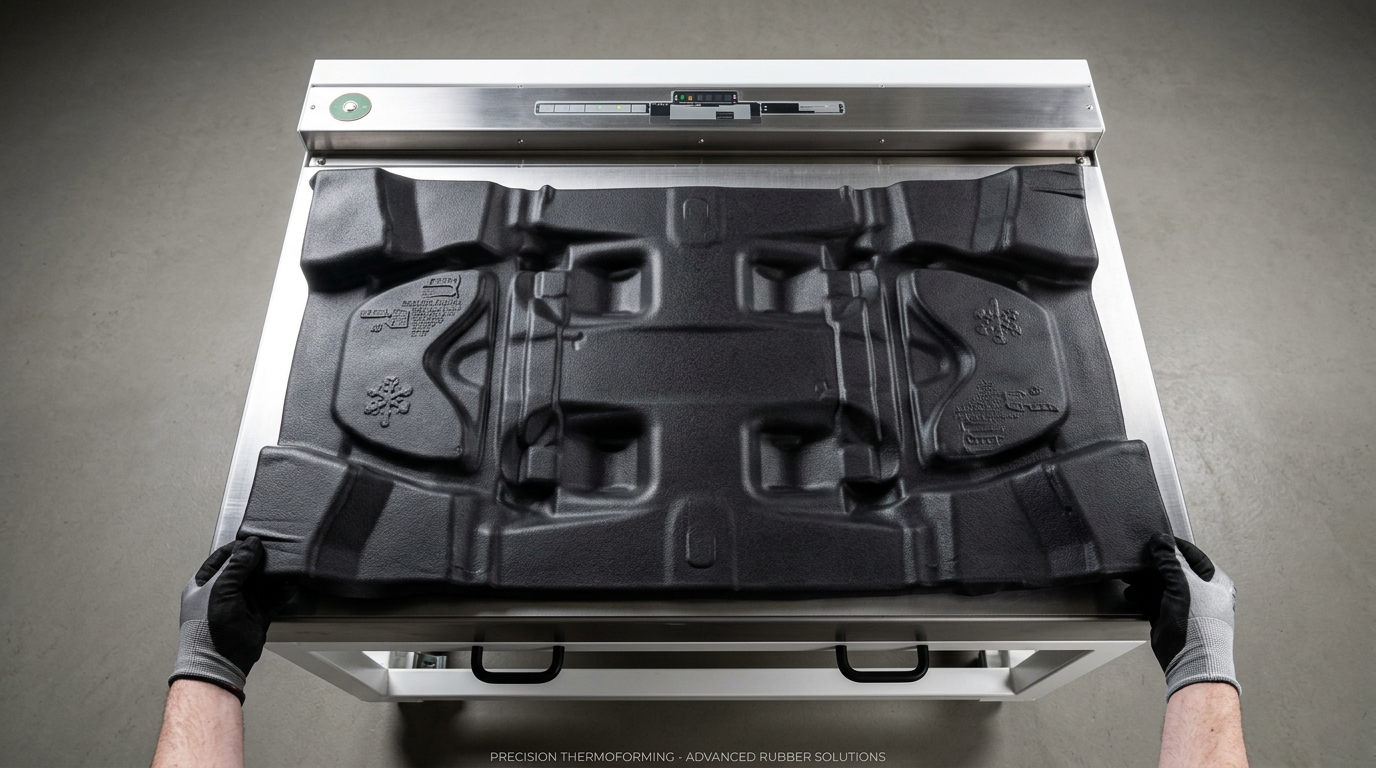
A thermal-imaging camera sees the material differently from the eye — it shows the temperature distribution across every point of the surface. Thanks to that we know whether the table heats evenly, or whether a “cold island” is forming somewhere that would spoil the forming step.
The thermal image is recorded in real time during tests and process commissioning. That lets us catch problems invisible to the naked eye — and correct them before they affect part quality.
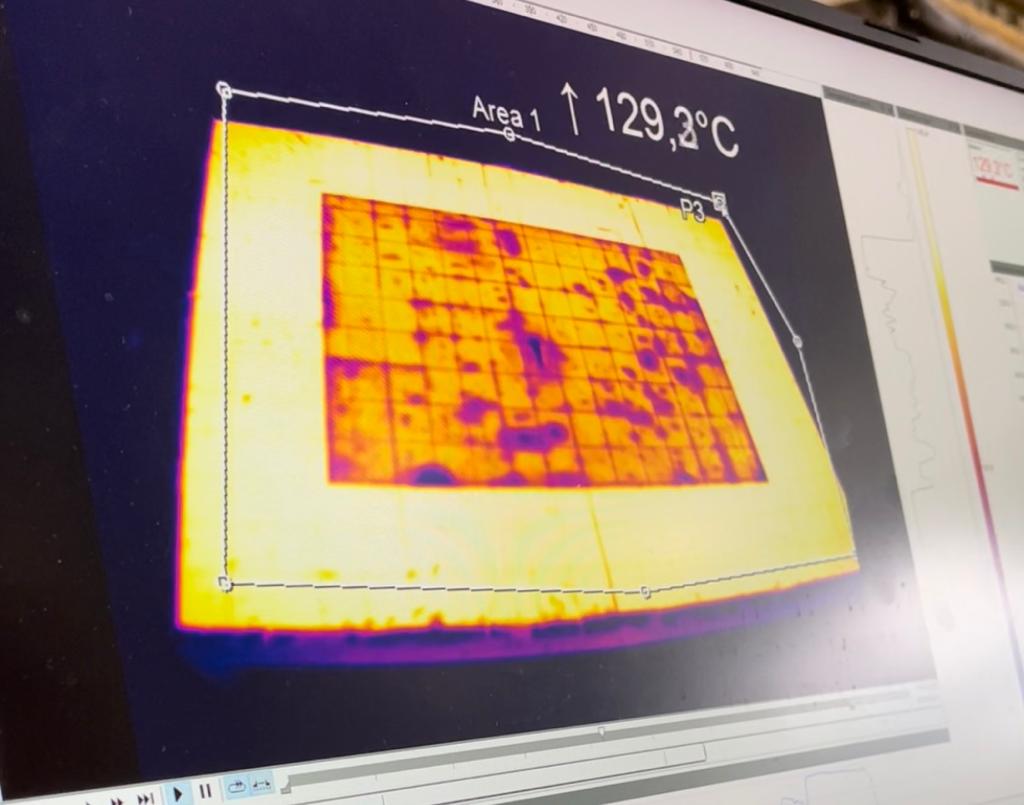
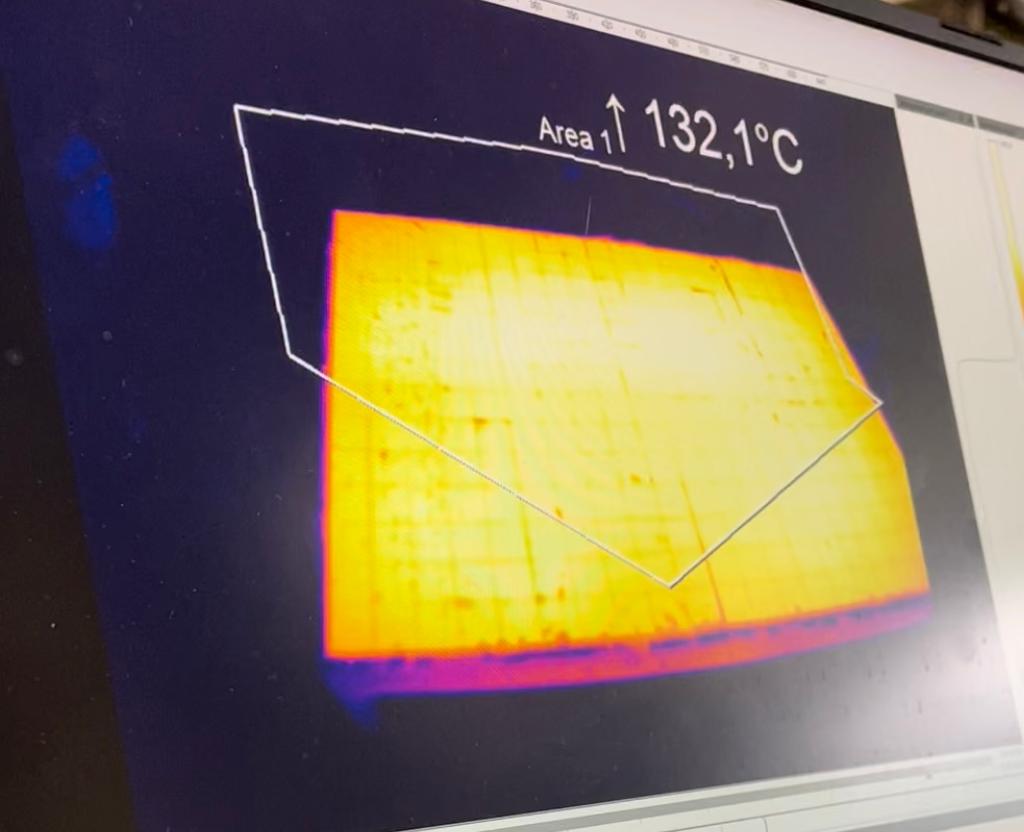
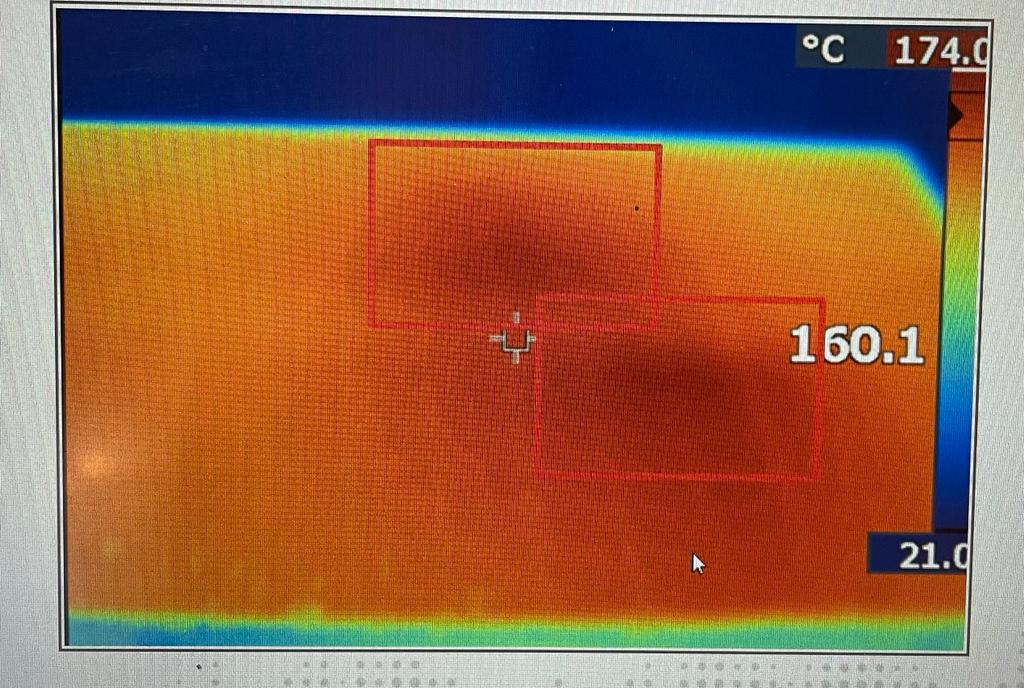
The polymer material is heated to a precisely set temperature. Stable heating is the key to even forming of the part.
A thermal camera monitors the heat distribution across the whole material surface — operator and system see every temperature gradient.
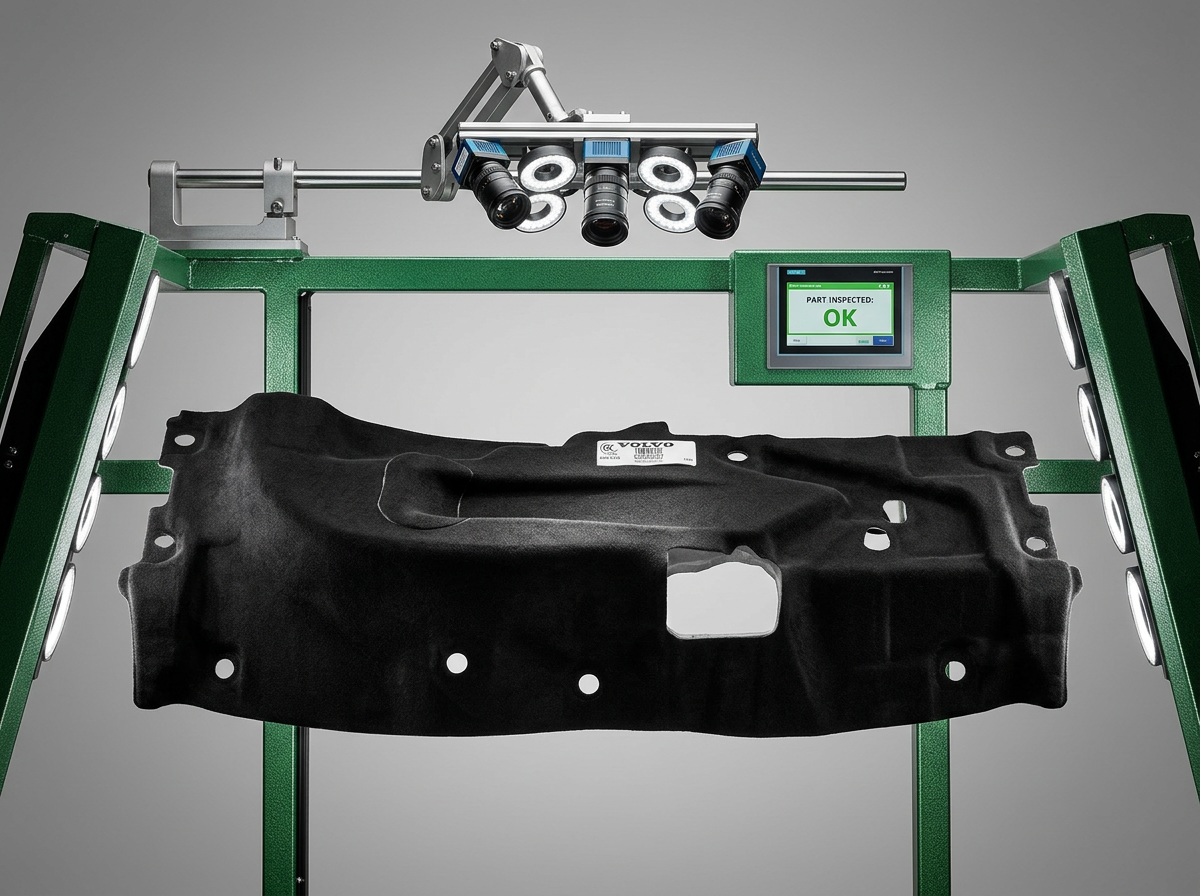
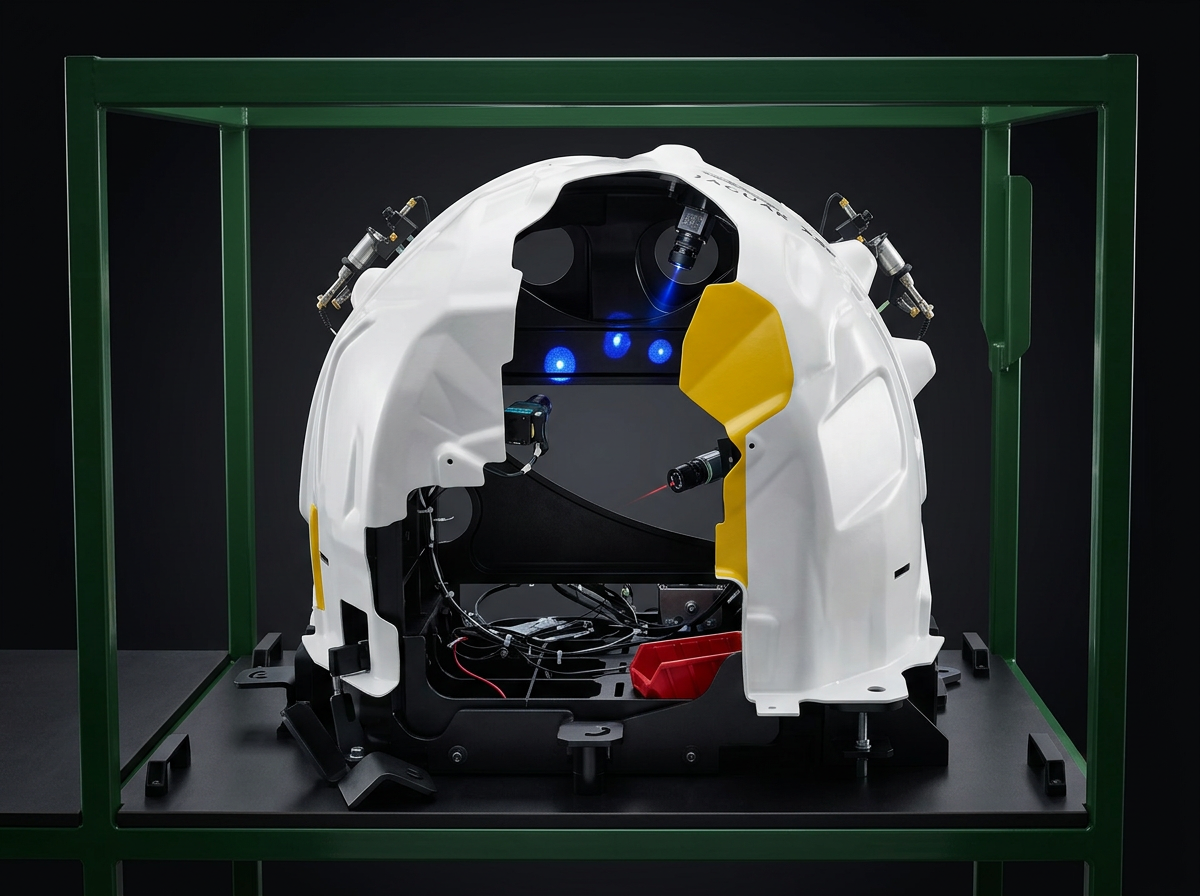
Stations with cameras and sensors detect bonding errors, missing components or incorrect placement — a faulty part will not leave the line.
Every cycle has the same temperature profile, timing and control. Batch after batch — no “good days” and “bad days”.
Optimized tables and tooling shorten heating and forming time, which translates into higher line throughput.
Stations are tuned to a specific compound — from soft liners to stiffer technical parts.
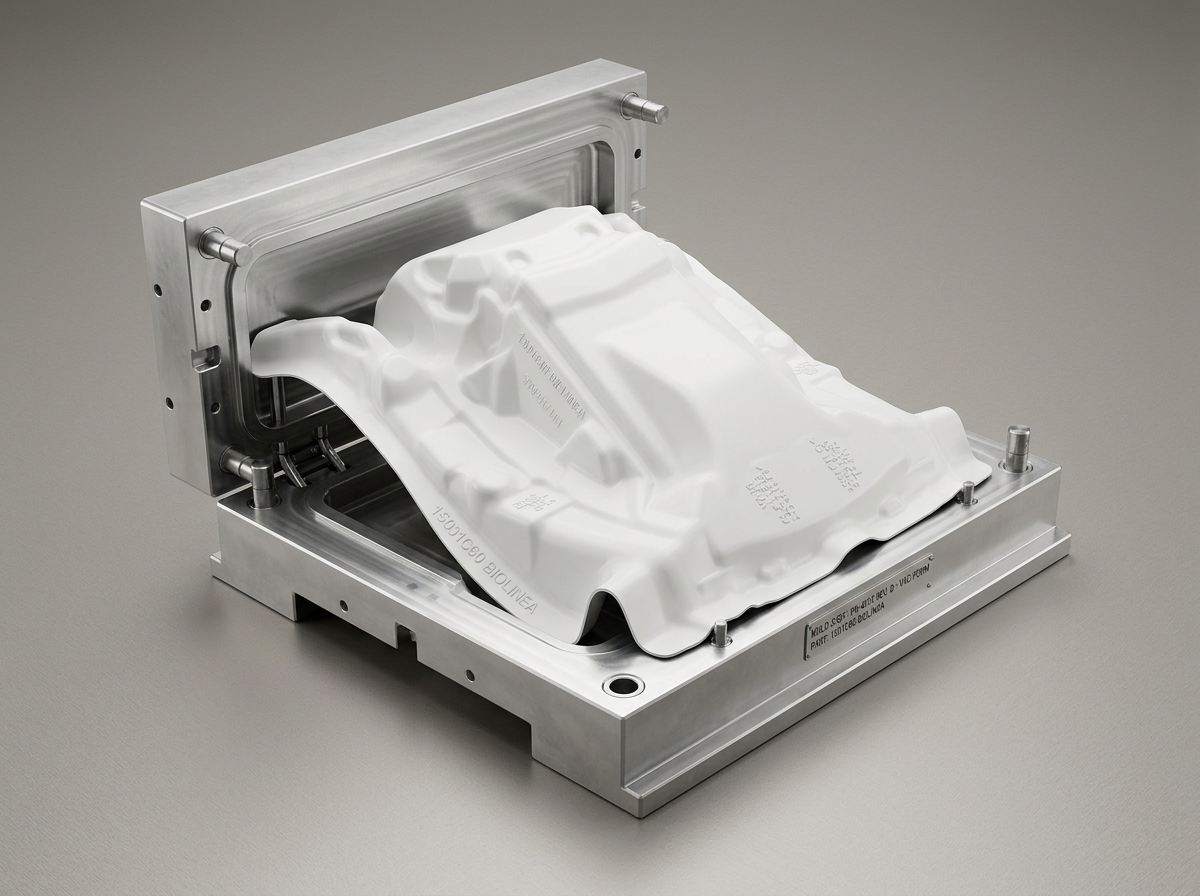
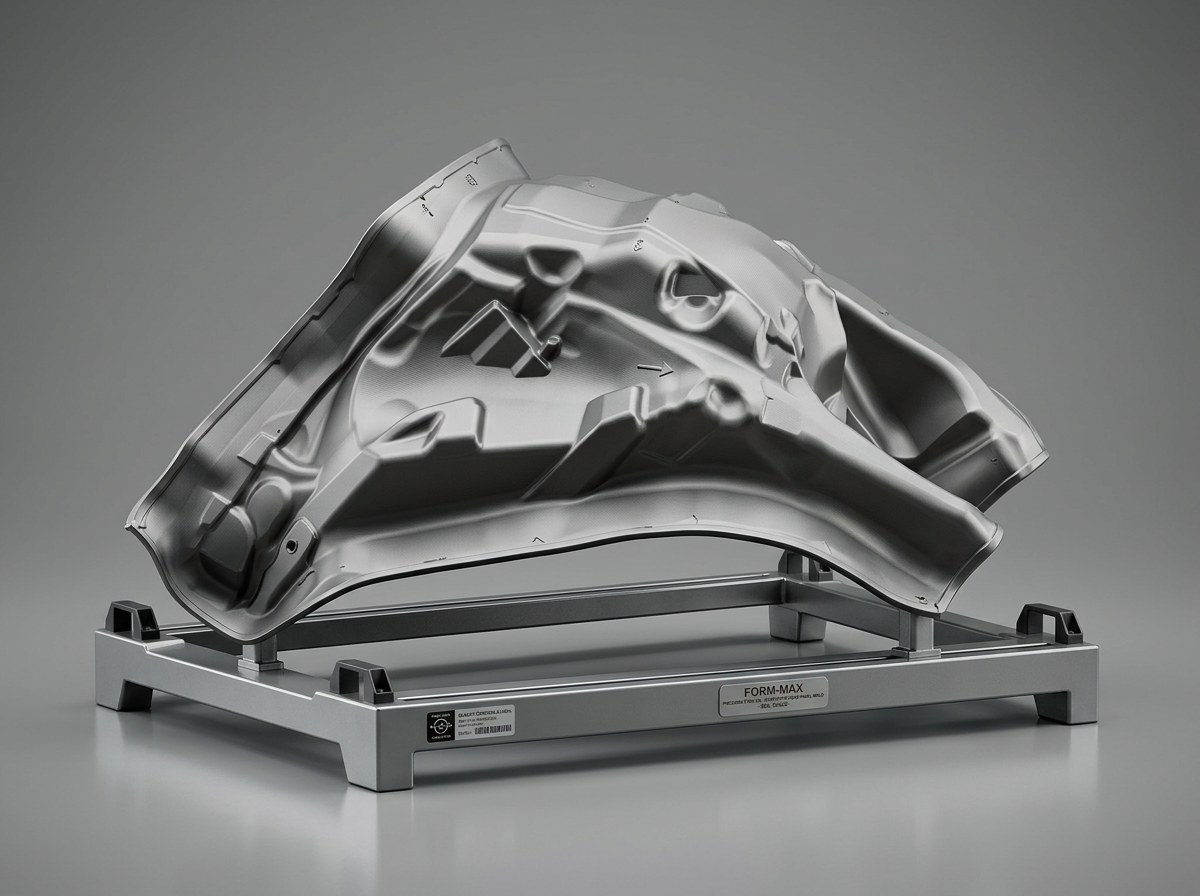
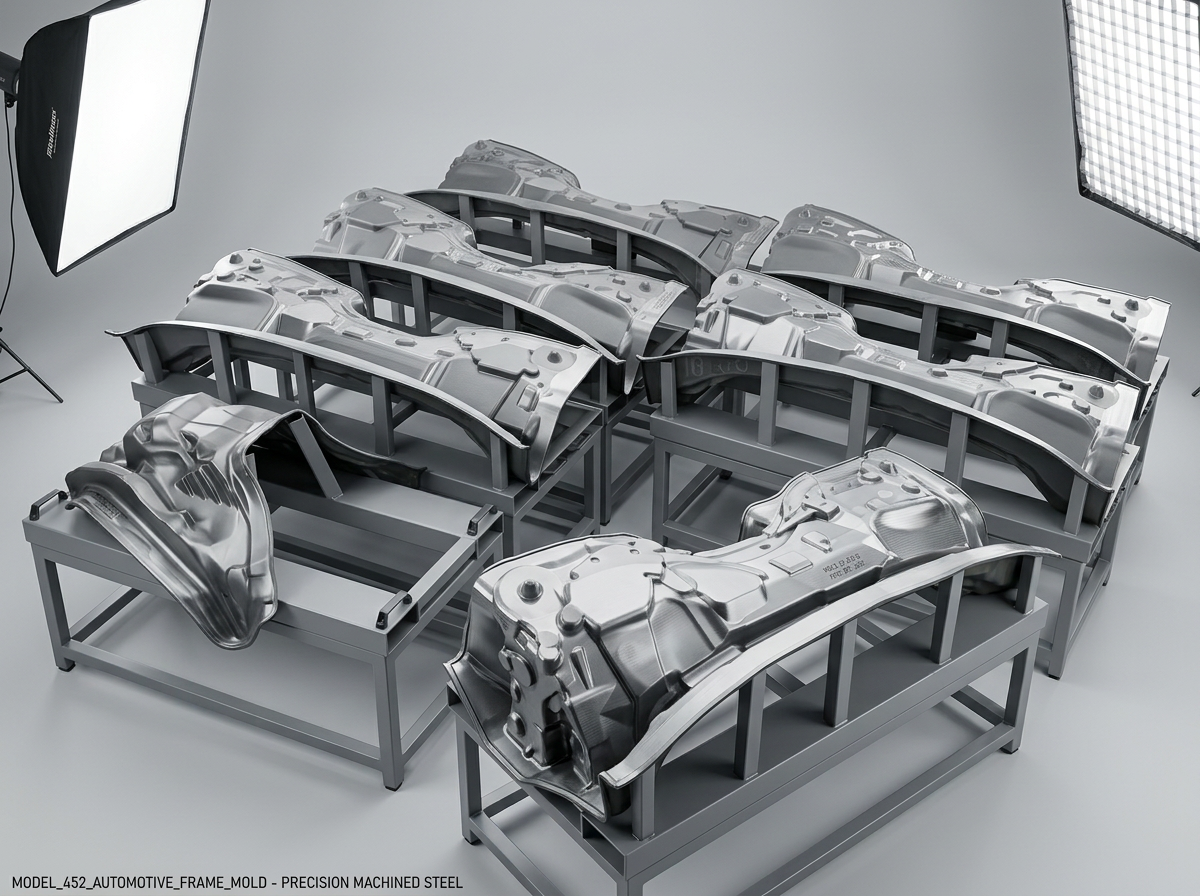
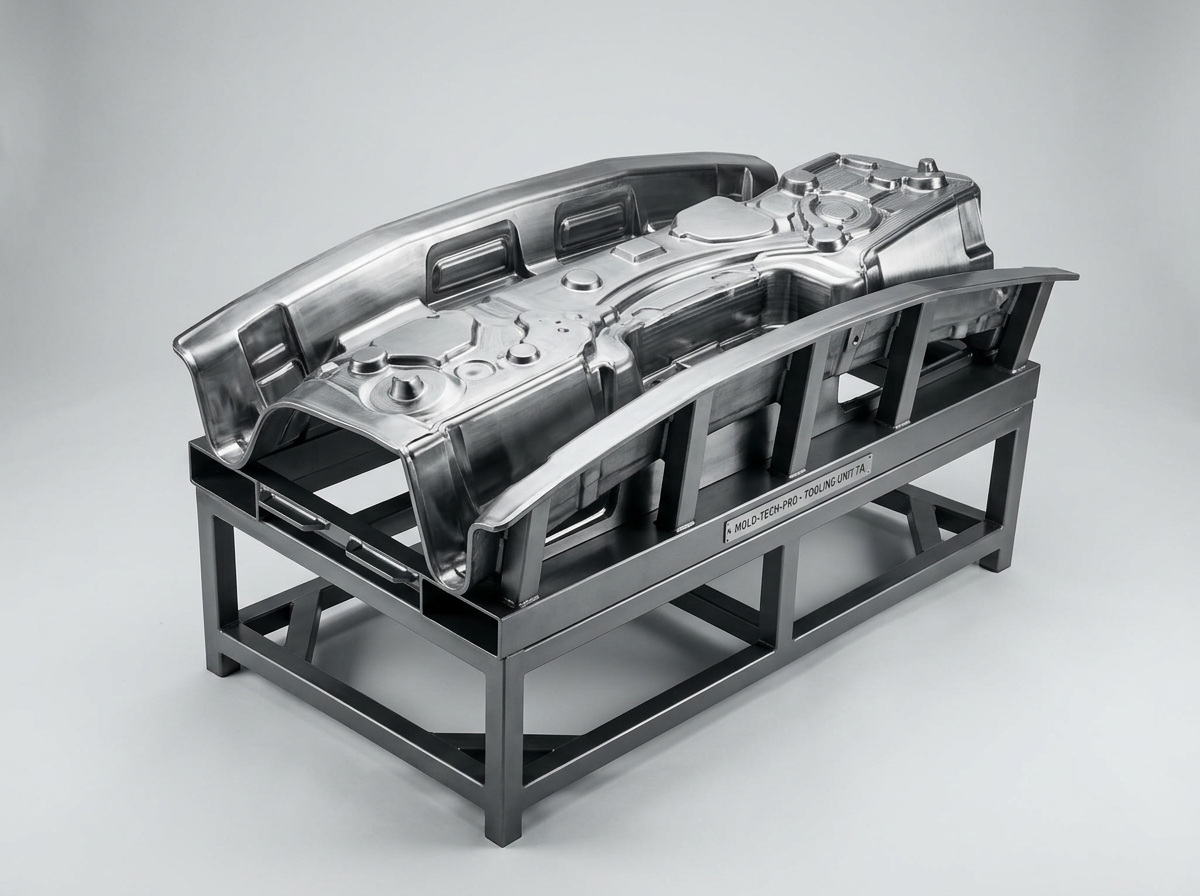
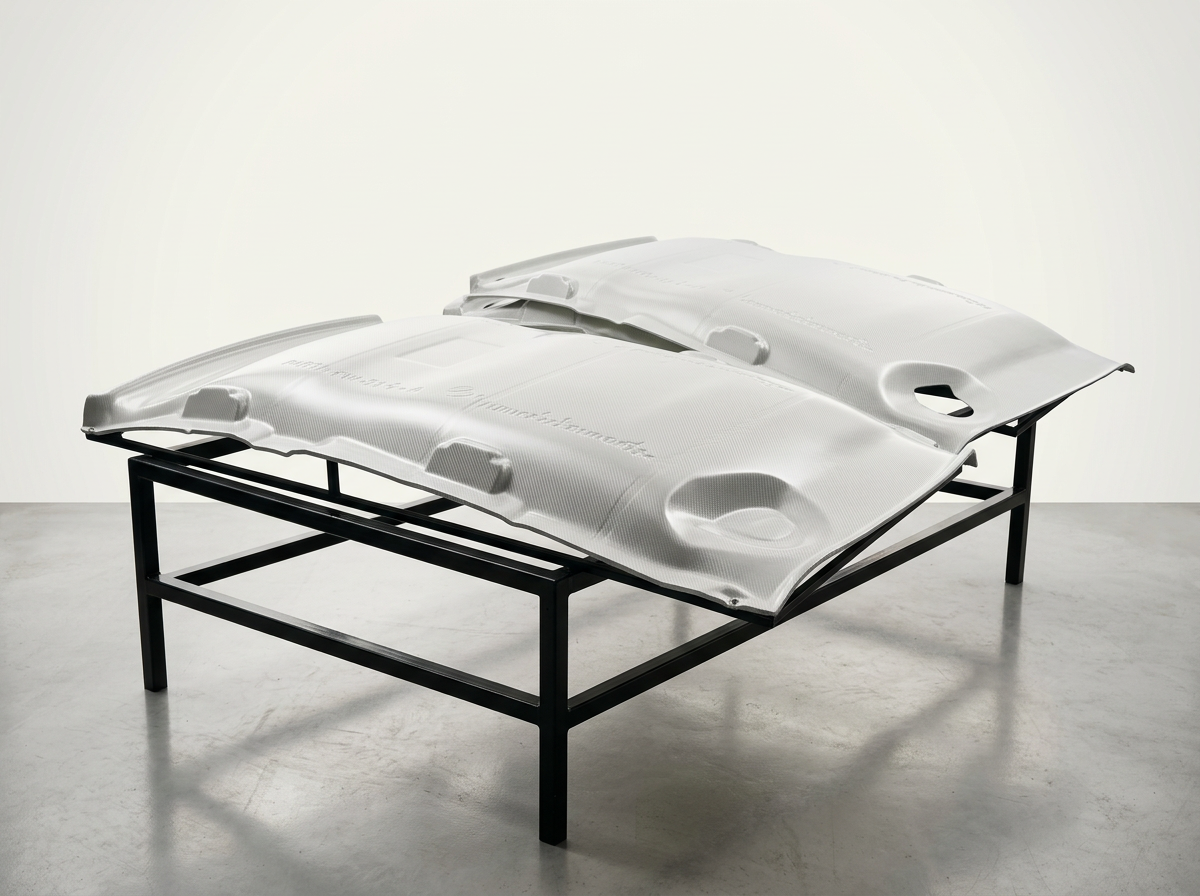
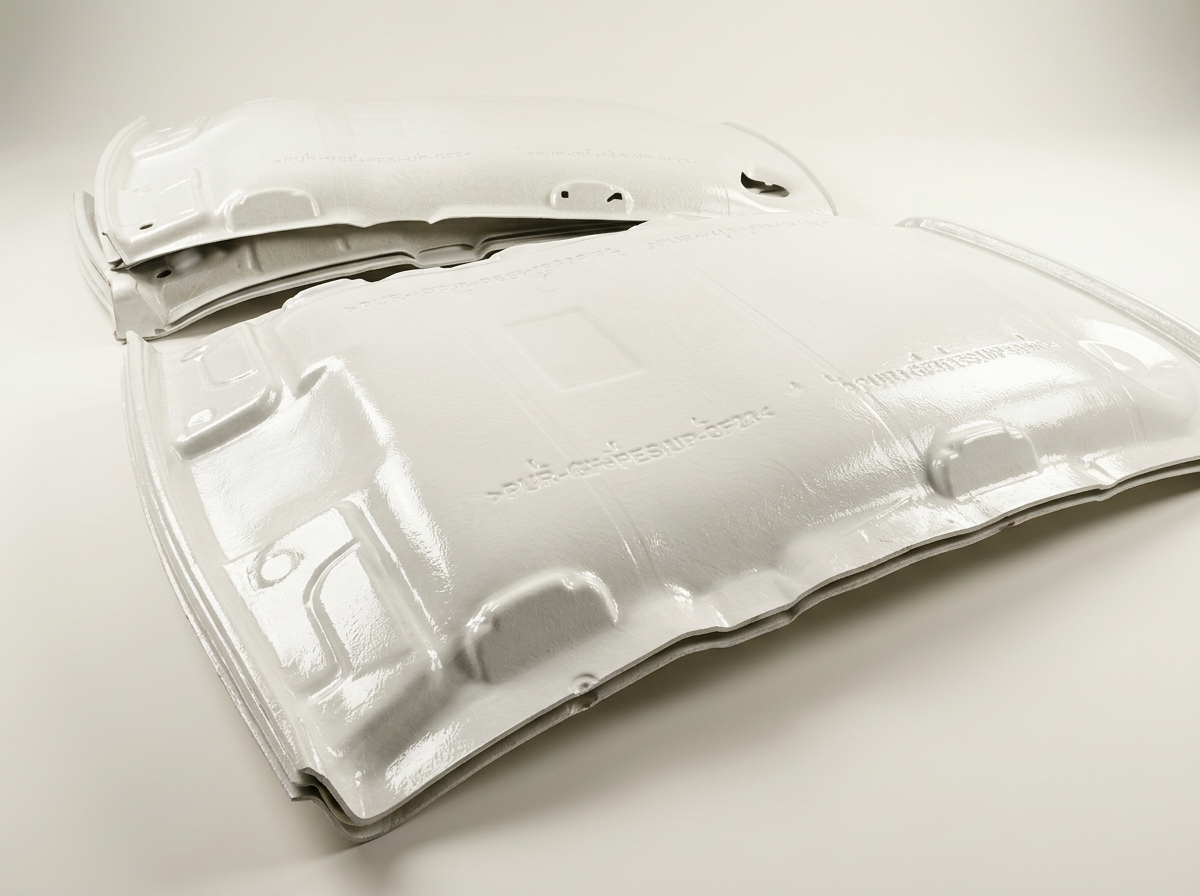
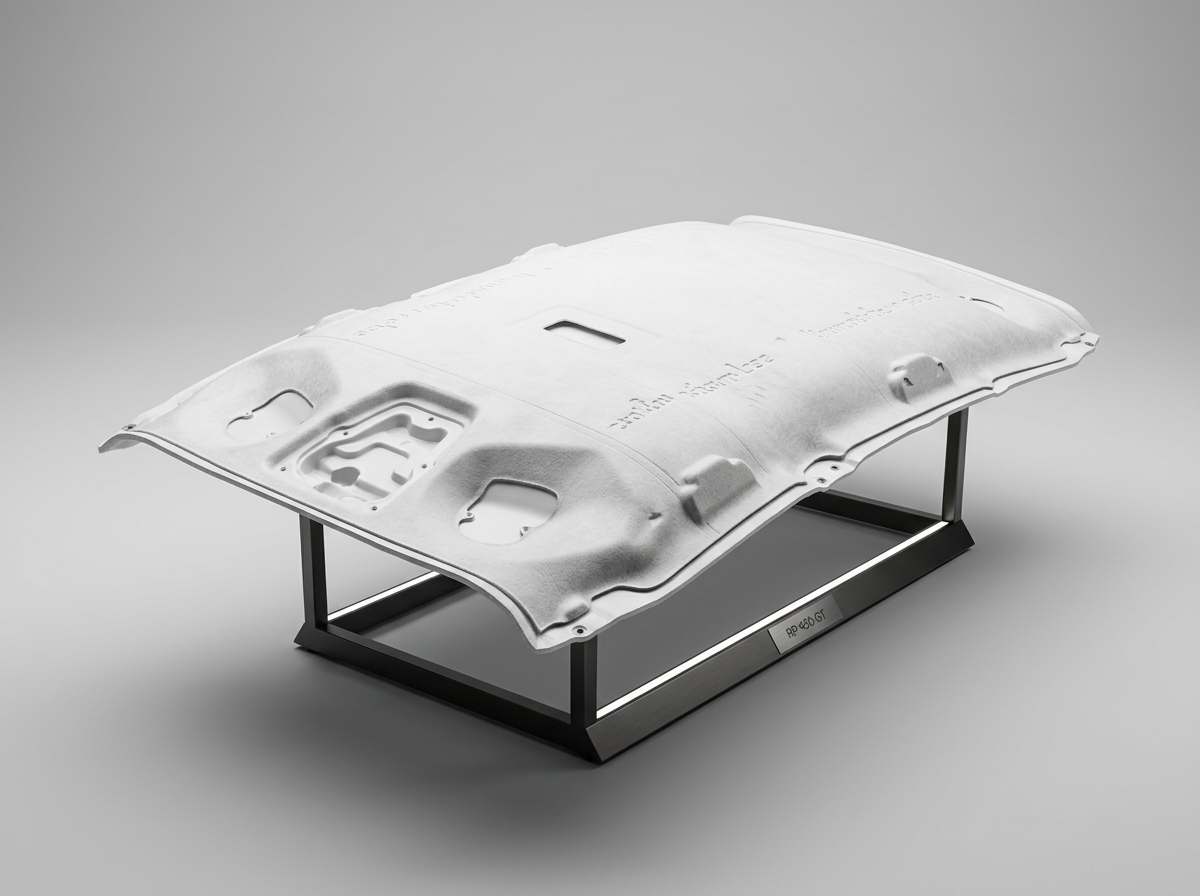
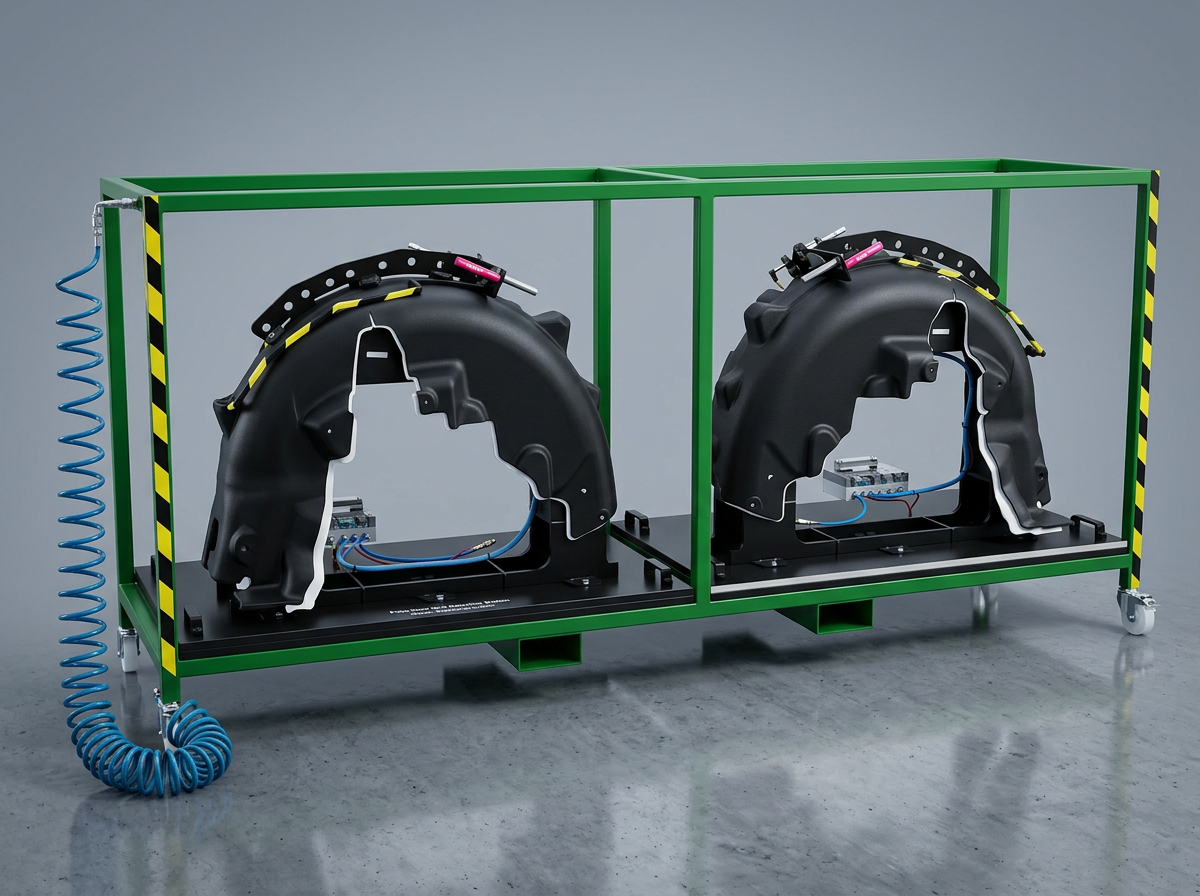
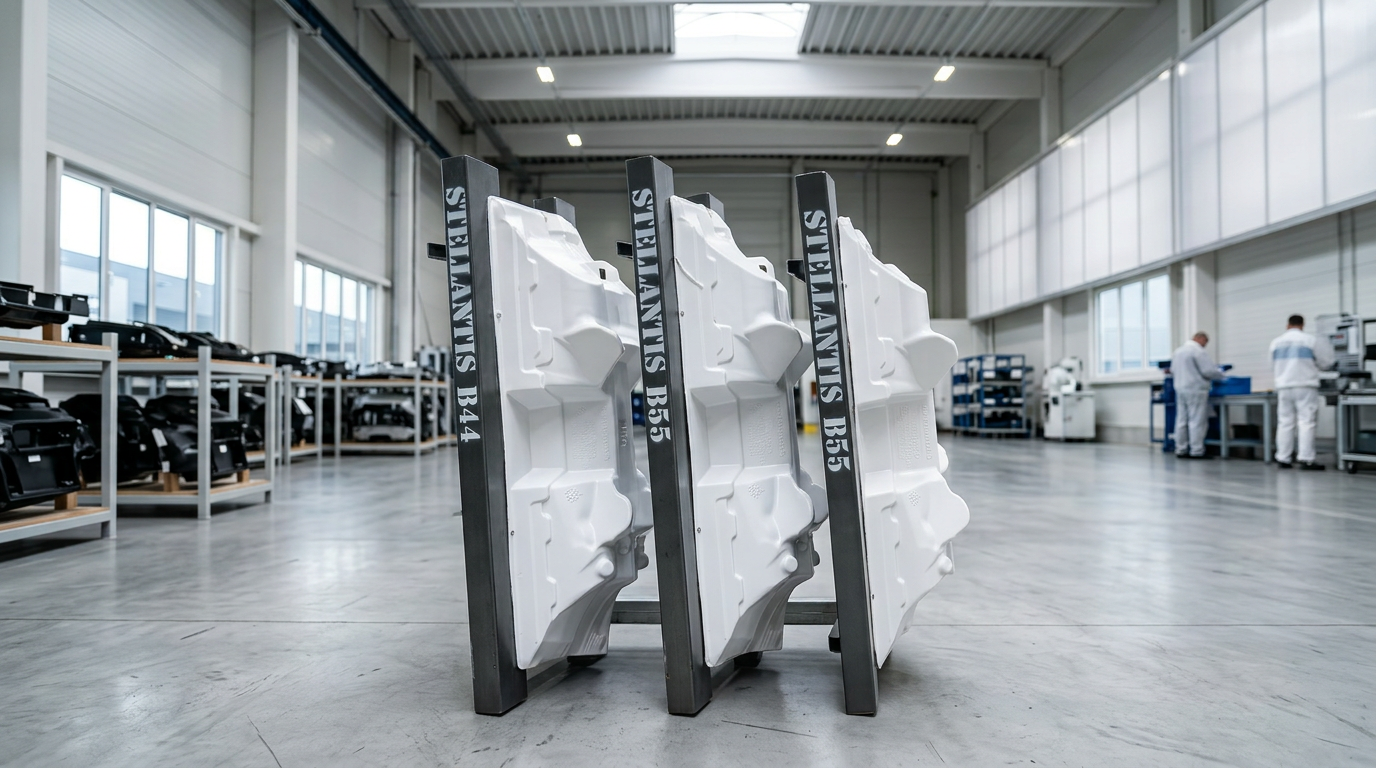
We design molds for a specific part and series. Below — selected tooling and finished liners and polymer components that left our production line.
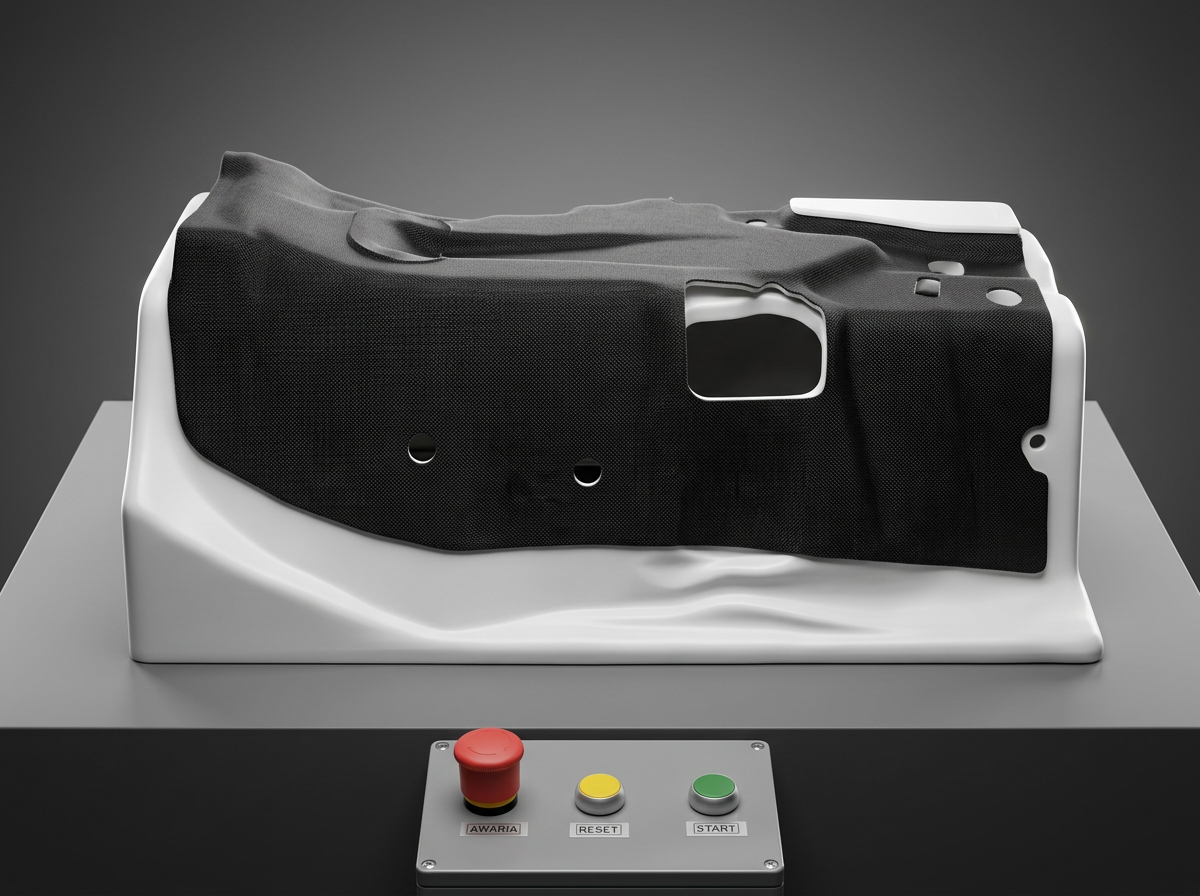
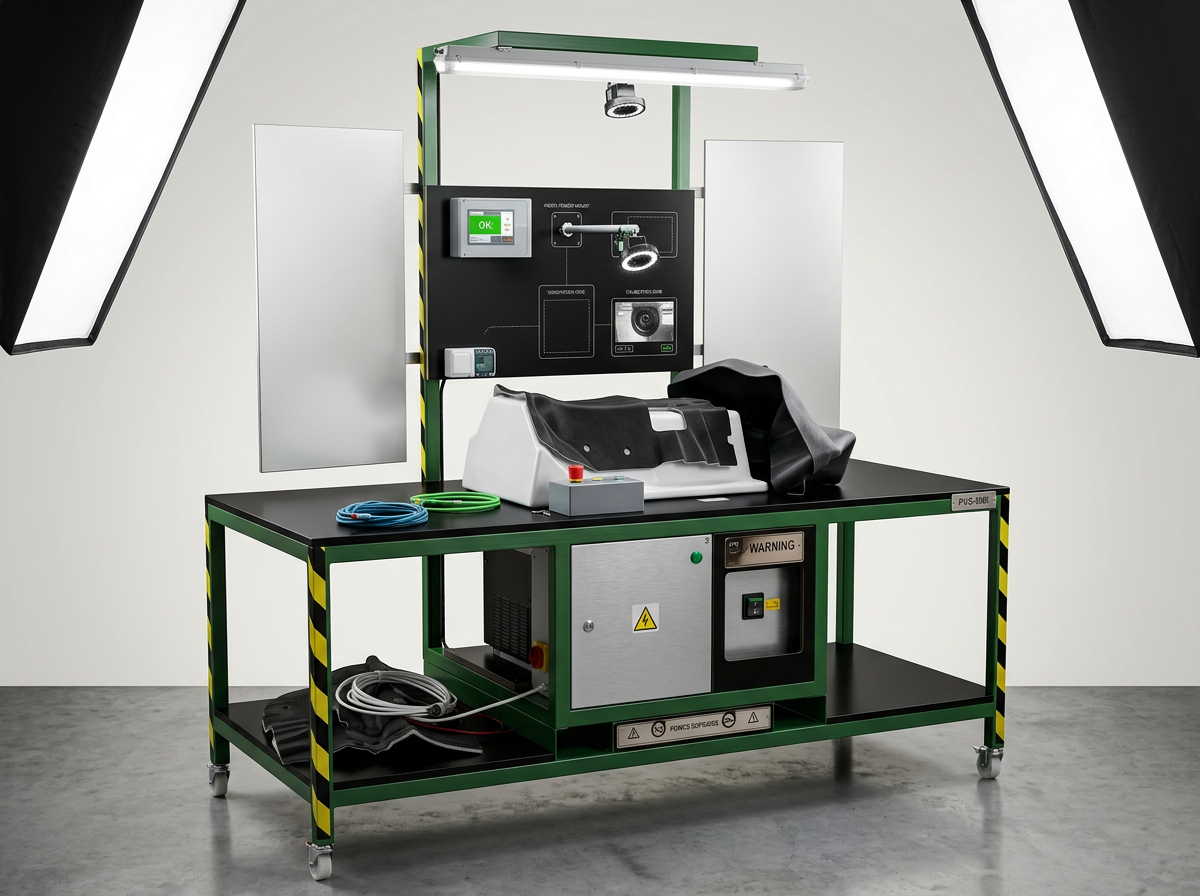
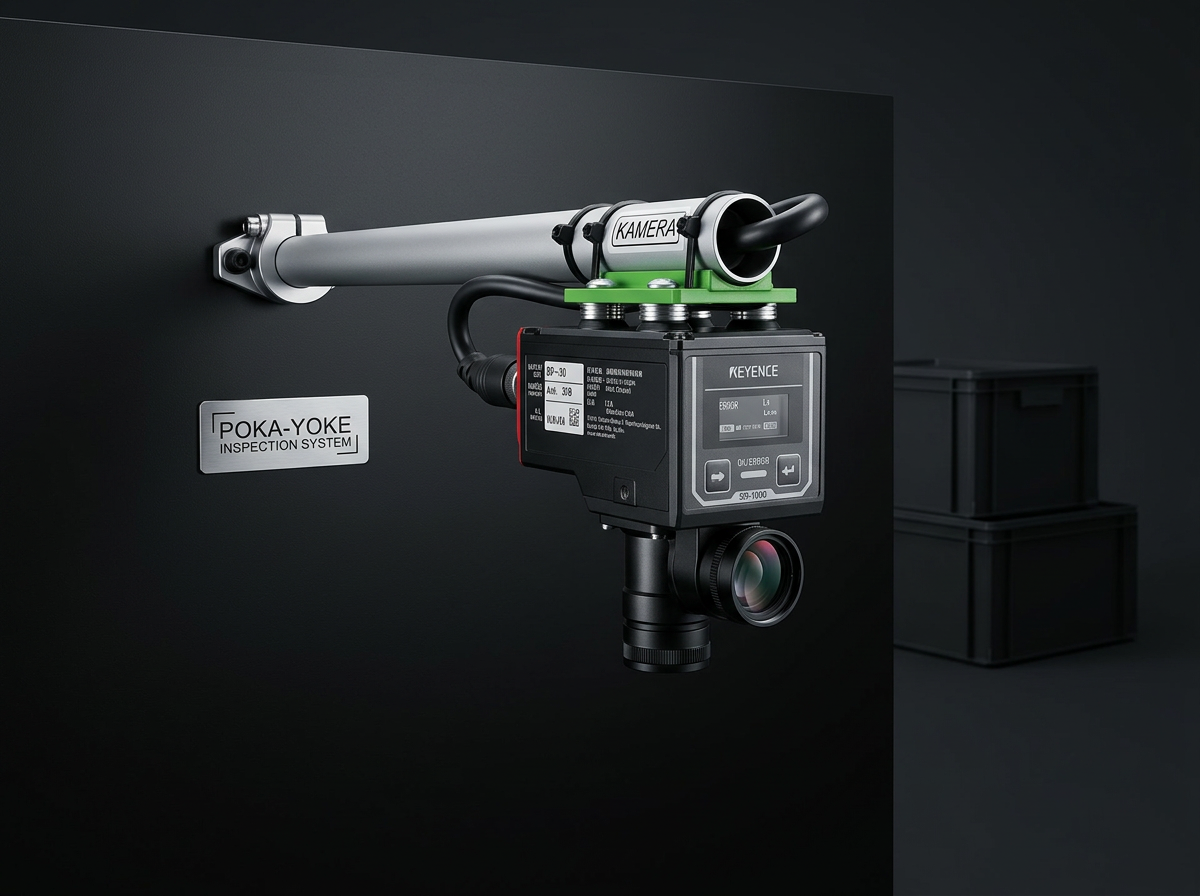
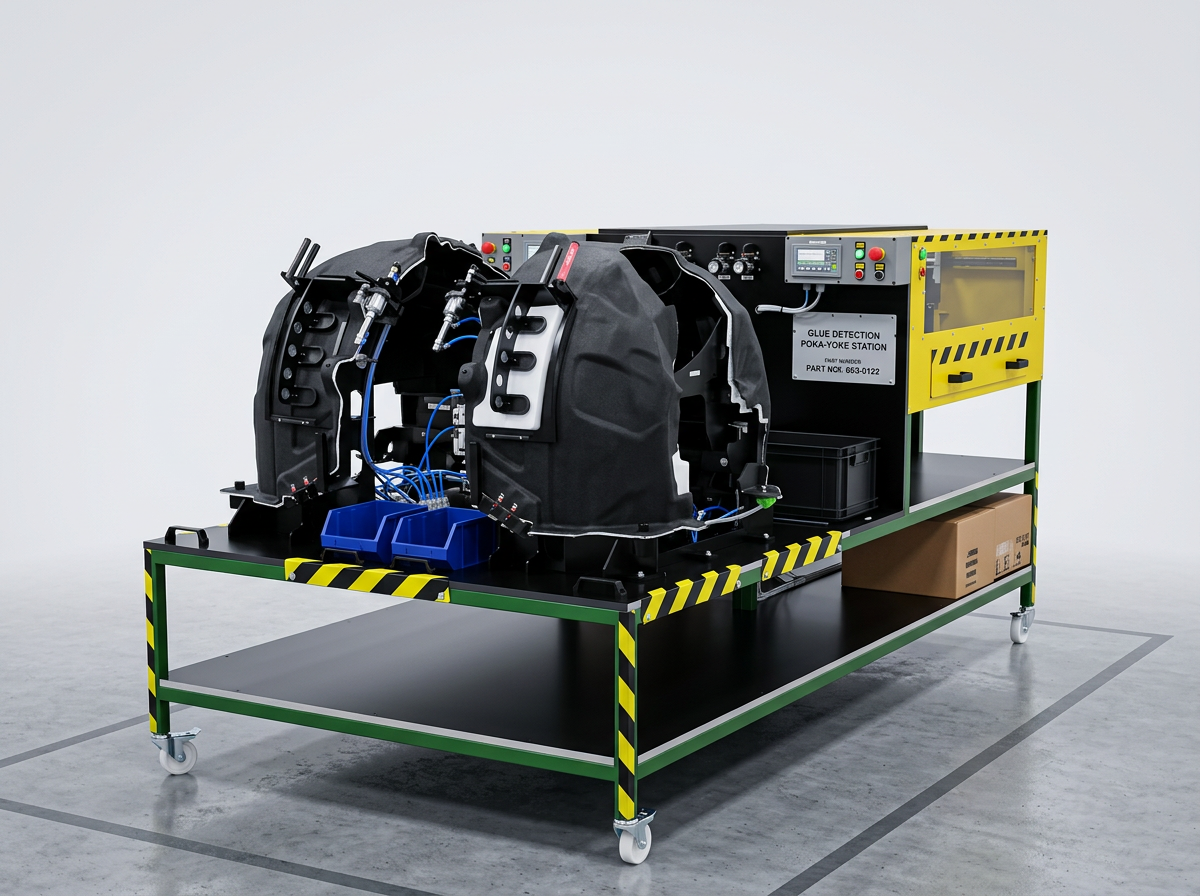
Poka-yoke is a Japanese philosophy of designing stations so that errors simply cannot occur — or are caught immediately. For us that means a station with a camera and sensors that inspects a part before it moves on.
Inspection stations detect things like missing adhesive, a skipped component or incorrect placement. If something is off, the line stops the part and signals the issue.
Describe the application, material and volume — we will propose a heating process, tooling and quality control. We reply within 48 hours.